Kenya vs Tanzania Safari
Kenya and Tanzania share the Great Migration, the Maasai culture and some of Africa's finest wildlife, but they offer quite different safaris. Here we compare parks, wildlife, crowds, costs and seasons, so you can choose the country that suits you best, or combine both.
The Serengeti and Maasai Mara are one connected wilderness.
Larger parks, fewer vehicles and a wider choice of regions.
Short drives and flights from Nairobi, and private conservancies.
A short flight links Kenya's and Tanzania's safari hubs.
Kenya vs Tanzania: the short answer
Both countries offer world-class safaris, and you will not be disappointed by either. As a rule, Tanzania suits travellers who want vast, wild landscapes, the Great Migration across most of the year and a classic route through the Serengeti, the Ngorongoro Crater and Tarangire, finished with a beach stay on Zanzibar.
Kenya suits travellers with less time, who want short transfers from Nairobi, the dramatic Mara River crossings in the late dry season and the flexibility of private conservancies, where night drives and walking safaris are allowed. Many first-time visitors choose Tanzania for its scale; many repeat visitors return to explore both.
Serengeti vs Maasai Mara
The Serengeti in Tanzania and the Maasai Mara in Kenya are two halves of the same ecosystem, divided only by the border. The Serengeti is far larger, at almost 15,000 km², compared with around 1,500 km² for the Mara reserve, so it feels wilder and less crowded, with a wide choice of areas to explore.
The Mara is smaller and can be busy at river crossings in peak season, but its wildlife density is superb, and the private conservancies around it limit vehicle numbers, giving an exclusive experience. Both are excellent for lions, cheetahs and leopards.

Where is the Great Migration?
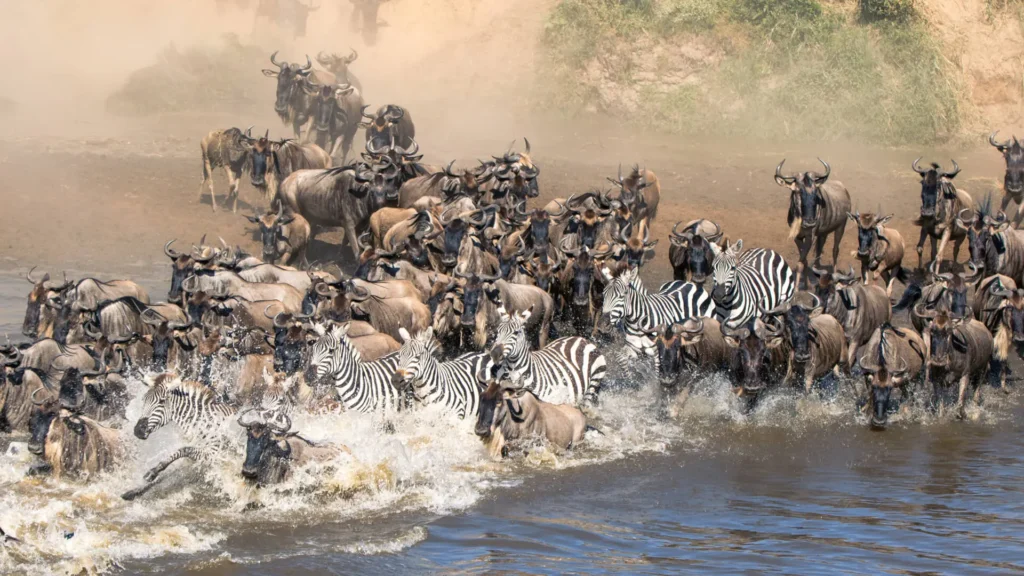
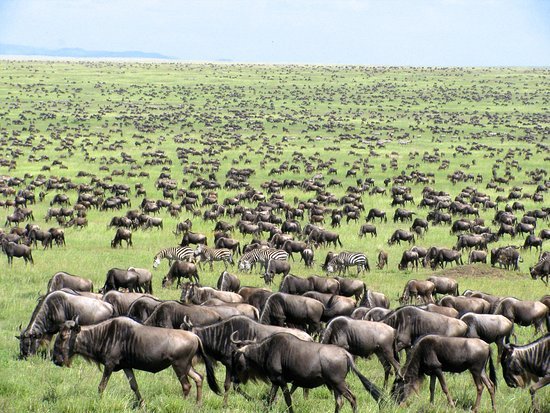
The wildebeest herds spend most of the year in Tanzania, calving in the southern Serengeti from January to March, moving through the central and western Serengeti and reaching the north in the dry season. They cross into Kenya's Maasai Mara usually from around July or August to October, before returning south. So if you want to see the migration outside the late dry season, Tanzania is the better choice, while the Mara is superb for river crossings from August to October.
When is the Great Migration? →Wildlife: how do they compare?
Both countries offer the Big Five and outstanding predator viewing. Tanzania has the Ngorongoro Crater, one of the best places in Africa to see black rhino, the huge elephant herds of Tarangire and the remote wilderness of Nyerere and Ruaha in the south, home to wild dogs.
Kenya has Amboseli, famous for its elephants beneath Mount Kilimanjaro, the special northern species of Samburu, such as Grevy's zebra and reticulated giraffe, and rhino sanctuaries such as Lake Nakuru and the Laikipia conservancies. Either way, you will see an extraordinary variety of animals.
Crowds, conservancies and safari style
Tanzania's parks are large, so even popular areas rarely feel crowded outside the busiest migration spots. Its lodges and camps range from comfortable mid-range lodges to intimate luxury tented camps, and safaris usually combine road travel with short flights.
Kenya's private conservancies are one of its great strengths. Because they are run with local communities, they allow off-road driving, night drives and walking safaris and limit the number of vehicles at each sighting. Inside the national reserves, however, peak-season sightings can attract more vehicles.
Is Kenya or Tanzania cheaper for a safari?
Prices are broadly similar for a comparable level of comfort. Tanzania's park fees are higher, and its parks are farther apart, so longer safaris can cost a little more. Kenya can be slightly cheaper for short trips, thanks to quick access from Nairobi, although the conservancies and top camps are priced at a premium.
In both countries the comfort level of your camps changes the price most. Our private Tanzania safaris start from about US$3,500 per person for six days at mid-range lodges, based on two travellers sharing.
Beaches, mountains and culture
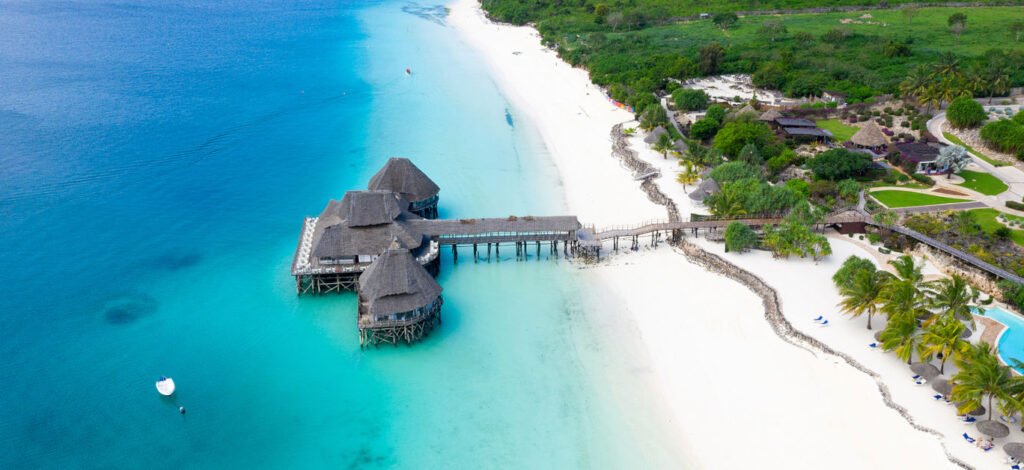
Tanzania offers Zanzibar, with its spice history, Stone Town and white beaches, as well as Mount Kilimanjaro, Africa's highest mountain, for those who want to climb. Kenya has the beaches of Diani and the Swahili town of Lamu, and Nairobi, with its giraffe centre and elephant orphanage.
Both countries are home to the Maasai, and visits to local communities can be arranged in either. Tanzania also adds the Hadzabe and Datoga cultures around Lake Eyasi for travellers who want to go further.
Can you combine Kenya and Tanzania?
Yes, and it makes a superb journey. A popular route flies between Nairobi and Arusha or Kilimanjaro, or links the Maasai Mara and the northern Serengeti by light aircraft, so you can see the best of both countries in ten to fourteen days.
Most visitors need a visa for each country, and Kenya uses an online electronic travel authorisation. If you arrive in Tanzania from Kenya, you will also need a yellow fever vaccination certificate. We arrange all the flights and border details for you.
Our Tanzania safari journeys
If Tanzania feels right for you, compare our private safaris below, from six-day migration safaris to ten-day safari and Zanzibar holidays. We can also add a few nights in Kenya.
 Northern Tanzania
 Northern Tanzania
 Northern Tanzania
 Northern Tanzania
 Northern Tanzania
 Northern Tanzania
 Northern Tanzania
 Northern Tanzania
 Northern Tanzania
 Southern Tanzania
Prices are a guide per person for two travellers sharing. However, we confirm them for your dates and party size before booking.
Kenya vs Tanzania questions
If you have a question we haven't covered, our Tanzania-based team is happy to help, so just ask.
Is Kenya or Tanzania better for a safari?
Both are excellent. Tanzania offers larger, wilder parks, the Great Migration for most of the year and Zanzibar's beaches, while Kenya offers easy access from Nairobi, private conservancies and the Mara River crossings from August to October.
Is the Serengeti better than the Maasai Mara?
The Serengeti is about ten times larger and feels wilder and less crowded, with the migration present for most of the year. The Mara is smaller but superb for wildlife density and river crossings in the late dry season.
When is the Great Migration in Kenya and Tanzania?
The herds are in Tanzania for most of the year, calving in the south from January to March, and usually cross into Kenya's Maasai Mara from around July or August to October.
Is Kenya cheaper than Tanzania for a safari?
Costs are broadly similar. Tanzania's park fees are higher, so longer trips can cost a little more, while Kenya can be slightly cheaper for short safaris from Nairobi.
Which country is better for a first safari?
Both are great for first-timers. Tanzania's classic Northern Circuit with Zanzibar is hard to beat for variety, while Kenya suits travellers with less time.
Can you see the Big Five in both Kenya and Tanzania?
Yes. Both countries offer the Big Five, and Tanzania's Ngorongoro Crater is one of the best places to see black rhino.
Can I combine Kenya and Tanzania in one trip?
Yes. Flights connect Nairobi with Arusha and Kilimanjaro, and light aircraft link the Maasai Mara with the northern Serengeti, so a combined safari is easy to arrange.
Do I need separate visas for Kenya and Tanzania?
Yes, most visitors need a separate visa or travel authorisation for each country. The East Africa Tourist Visa does not include Tanzania.
Which has better beaches, Kenya or Tanzania?
Both have beautiful coastlines, but Tanzania's Zanzibar is the more popular choice to combine with a safari, thanks to its beaches, Stone Town and short flights from the parks.
Is Tanzania or Kenya safer for tourists?
Both countries are popular, welcoming safari destinations. Safaris take place in remote parks with experienced guides, and normal travel precautions apply in cities.