Great Migration Safari in Tanzania
Follow more than a million wildebeest and zebra across the Serengeti on a private safari timed to the herds, from the calving plains of Ndutu to the Mara River crossings.
We plan your route around where the migration is in the month you travel.
Mara River crossings from July to October, newborn calves from January to March.
Seasonal camps that move with the herds, so you wake up close to the action.
Your own vehicle and guide, free to wait at a crossing for as long as it takes.
What is a Great Migration safari?
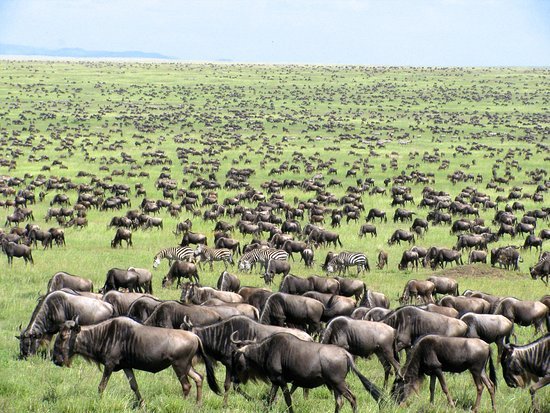
The Great Migration is the year-round journey of around 1.5 million wildebeest, together with hundreds of thousands of zebra and gazelle, through the Serengeti–Mara ecosystem of northern Tanzania and southern Kenya. The herds follow the rains and fresh grass in a loop that takes them from the southern plains to the Mara River and back again.
A Great Migration safari is planned around that movement. Because the herds are in Tanzania for most of the year, we choose the area of the Serengeti, the camps and the length of your stay to match your travel dates, then add Tarangire or the Ngorongoro Crater for a complete northern Tanzania safari.
How we plan your migration safari
The migration doesn't follow a fixed calendar, so good planning makes the difference between seeing the herds and missing them.
Choose your season
Tell us when you can travel and what you most want to see: river crossings, the calving season or big herds with fewer vehicles.
Stay near the herds
We match your dates to the right part of the Serengeti and book migration camps or lodges within reach of the herds.
Follow them with your guide
Your private guide tracks the herds each day, with full-day game drives and picnic lunches so you never have to rush back to camp.
Where to see the Great Migration
The herds pass through different parts of the Serengeti as the year goes on. These are the areas we plan migration safaris around.
Ndutu and the southern Serengeti
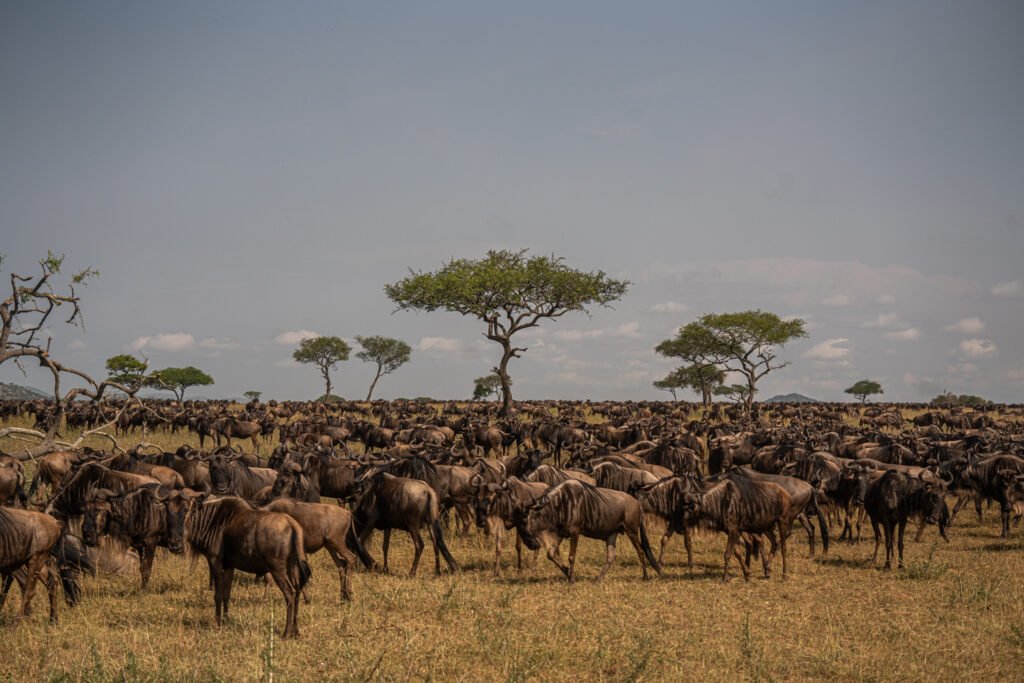
From about December to March the herds graze the short-grass plains and give birth to their calves.
Central Serengeti (Seronera)
Herds pass through from April to June, and the Seronera valley has excellent big cats all year.
Western Corridor and the Grumeti
In June and July the columns move west and cross the Grumeti River, home to large crocodiles.
Northern Serengeti and the Mara River
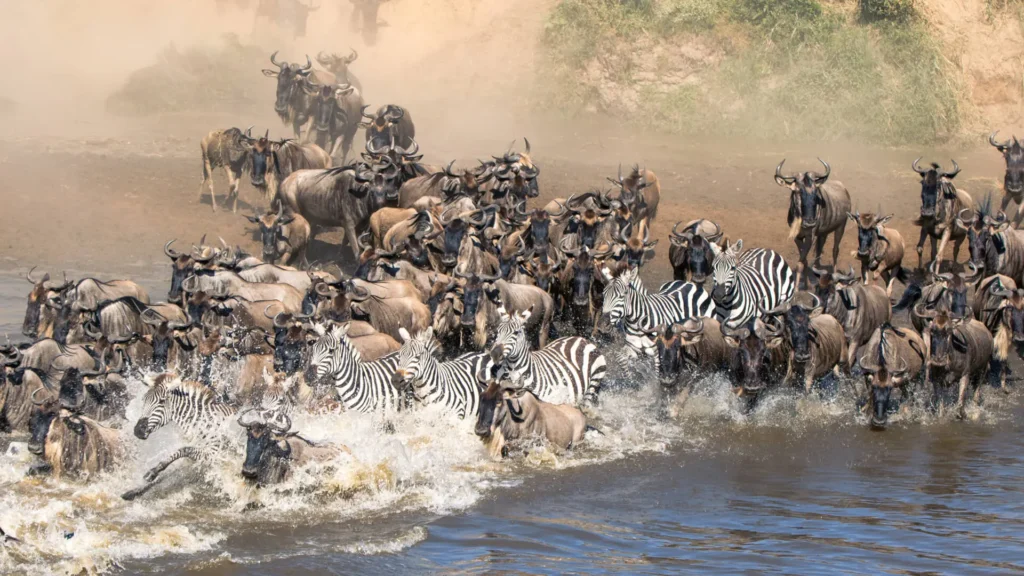
From July to October the herds gather in the north for the famous Mara River crossings.
Ngorongoro Crater
Most migration safaris also visit the crater, the best place in Tanzania to see black rhino.
Kenya's Masai Mara
The herds spend part of August to October in Kenya. See how a Tanzania and Kenya safari compare.
What you'll see on a Great Migration safari
No two days are the same, because the herds decide the route. These are some of the moments guests remember most.
Great Migration safari packages
Each journey below follows the herds in the Serengeti and can be adjusted to your dates. Compare the length and comfort level, then ask us to tailor one to the month you want to travel.
 Northern Tanzania
 Northern Tanzania
 Northern Tanzania
 Northern Tanzania
 Northern Tanzania
 Northern Tanzania
Prices are a guide per person for two travellers sharing. However, we confirm them for your dates and party size before booking.
How much does a Great Migration safari cost?
The cost of a private Great Migration safari depends mostly on the comfort level of the camps, the number of days in the Serengeti and whether you fly or drive between parks. July to October is peak season, so book early for the Mara River crossings.
Prices also vary by season, group size and internal flights. However, every quote is itemized and confirmed in writing before you book.
Best time for a Great Migration safari
There is no wrong month to see the migration in Tanzania, only different experiences. In November and December the herds return south with the short rains, ready for the next calving season.
July – October
The herds gather in the northern Serengeti and cross the Mara River. Peak season, so book early.
January – March
Around half a million calves are born on the southern plains, with lions and cheetahs close behind.
June – July
The columns move through the Western Corridor and cross the Grumeti River, with fewer vehicles than the north.
April – May
Lush landscapes, quiet parks and the lowest rates while the herds move through the central Serengeti.
The Mara River crossings
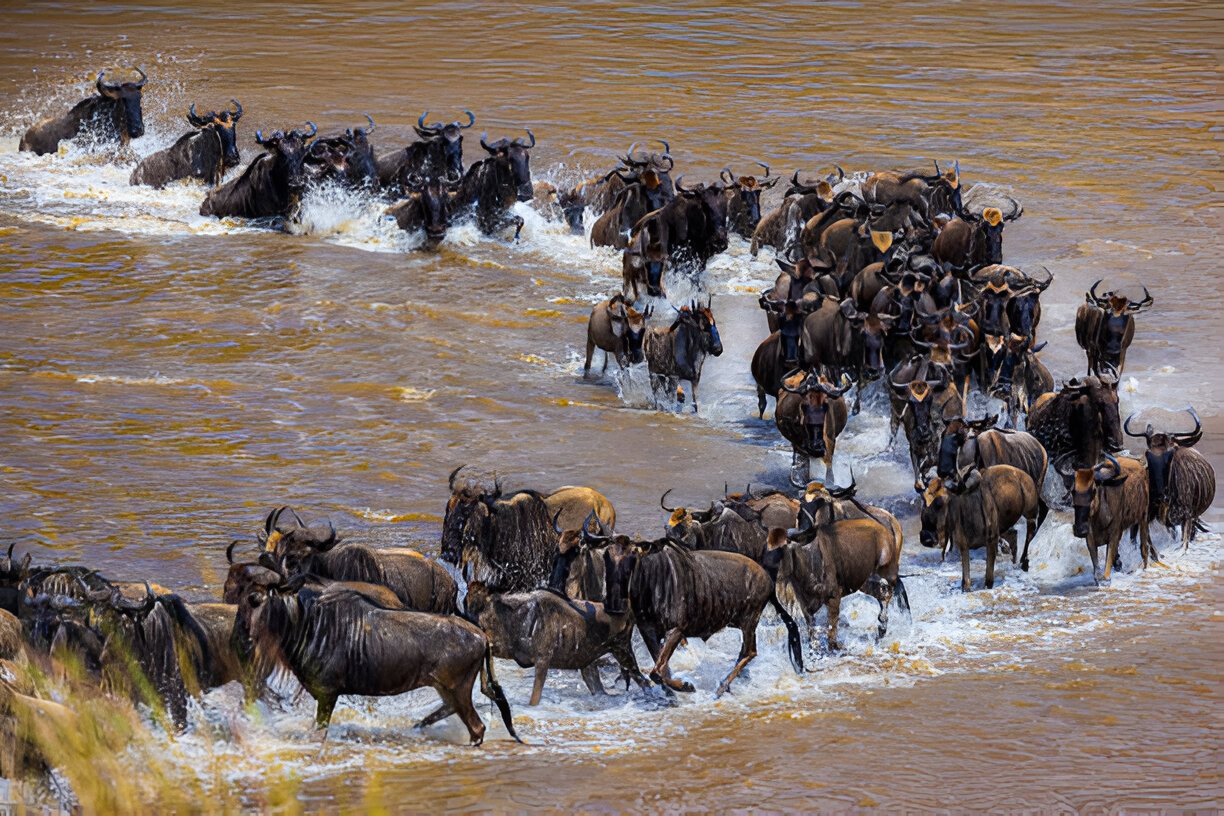
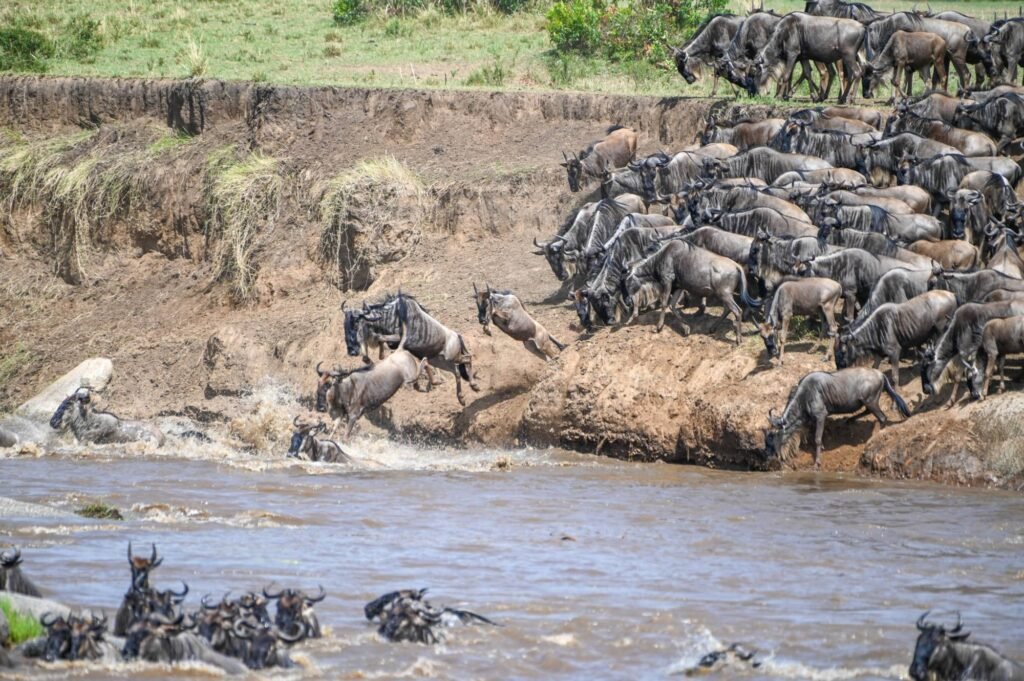
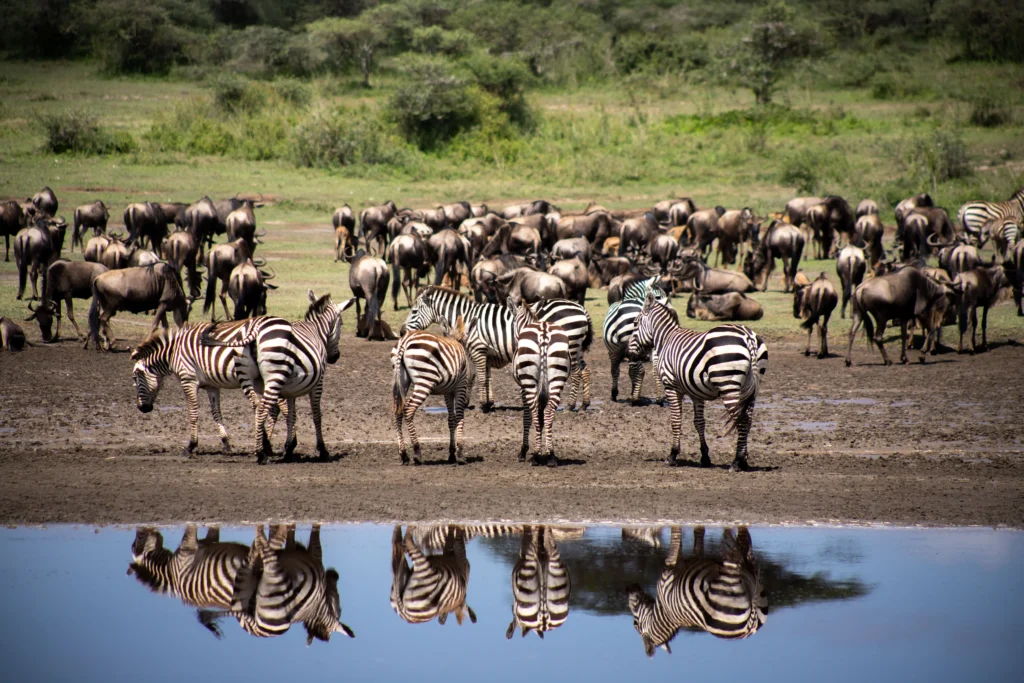
For many guests the river crossings are the reason to come. Thousands of wildebeest gather on the bank, sometimes for hours, before the first animal jumps and the rest follow through the current and past the crocodiles. Crossings happen many times a day in the peak months but never on a timetable, so a private vehicle and a patient guide make all the difference.
Plan a river crossing safari →What's included in a Great Migration safari
Inclusions vary by journey, so each itinerary lists exactly what is included and every quote also shows any additional costs.
Typically included
✓ All accommodation in your chosen lodges and camps, as well as all transfers
✓ Private safari vehicle and professional guide
✓ All activities, unless marked as optional
✓ Meals as listed in the day-by-day itinerary
✓ National park and conservation fees
✓ Taxes and VAT
✓ Airport meet-and-greet when you arrive in Tanzania
Not usually included
– International flights
– Extra nights before or after your journey
– Travel insurance, visa fees and personal items
– Tips for guides and camp staff (typically US$15–25 per person per day)
Need a hand with flights or extra nights in Arusha or Zanzibar? We can also arrange them for you.
Migration camps close to the herds
Seasonal migration camps move during the year to stay near the herds, while permanent lodges give you more space and comfort. We choose the right mix for your month of travel and budget.
 7 photos
 7 photos
Serengeti Mara River Camp
 7 photos
Moyo Tented Camp
 6 photos
Intimate Camp Zebra
 6 photos
Kubu Kubu Tented Lodge
 7 photos
Serenity Camp
 5 photos
 7 photos
Great Migration safari questions
If you have a question we haven't covered, our Tanzania-based team is happy to help, so just ask.
What is the best month for a Great Migration safari?
It depends on what you want to see. July to October is best for the Mara River crossings in the northern Serengeti, while January to March is the calving season on the southern plains around Ndutu. June and July bring the Grumeti River crossings in the Western Corridor.
How much does a Great Migration safari in Tanzania cost?
A private Great Migration safari starts from the prices shown on this page per person for two travellers sharing, and the cost rises with the comfort level of the camps and the length of the trip. July to October is peak season and the most expensive time to travel. Every quote is itemized before you book.
How many days do I need for a Great Migration safari?
We recommend at least six days, with three or more nights in the Serengeti. An eight-day safari gives you extra time with the herds and a better chance of seeing a river crossing, which can take hours of patient waiting.
Is the Great Migration in Tanzania or Kenya?
Both. The herds spend most of the year in Tanzania's Serengeti and cross into Kenya's Masai Mara for part of August to October. Tanzania offers the calving season, the Grumeti crossings and the Mara River crossings in the northern Serengeti.
Can I see a river crossing on a migration safari?
Crossings happen often in the peak months, but they are never guaranteed. Herds can gather at the river for hours or days before crossing. A private vehicle lets your guide wait at the right spot for as long as it takes.
Where is the Great Migration in each month?
From December to March the herds are on the southern plains around Ndutu. From April to June they move through the central Serengeti and the Western Corridor. From July to October they are in the northern Serengeti and the Masai Mara, before heading south again in November.
What is a migration camp?
A migration camp is a seasonal tented camp that moves during the year to stay close to the herds, usually in the southern Serengeti for the calving season and in the north for the river crossings. They combine comfortable tents with the feel of a classic safari camp.
Is the calving season a good time to visit?
Yes. Around half a million calves are born within a few weeks, the plains are green and predators such as lions, cheetahs and hyenas are very active. There are also fewer vehicles than during the river crossing season.
Can I combine a migration safari with Zanzibar?
Yes. Many guests end their safari with a few days on the beach in Zanzibar, a short flight from the Serengeti or Arusha. We can add the beach stay to any migration itinerary.
What should I pack for a Great Migration safari?
Bring light layers in neutral colours for cool mornings and warm afternoons, a warm jacket, a hat, sunscreen and binoculars. Soft bags are best if you fly between parks on light aircraft.
Can I add a hot air balloon flight?
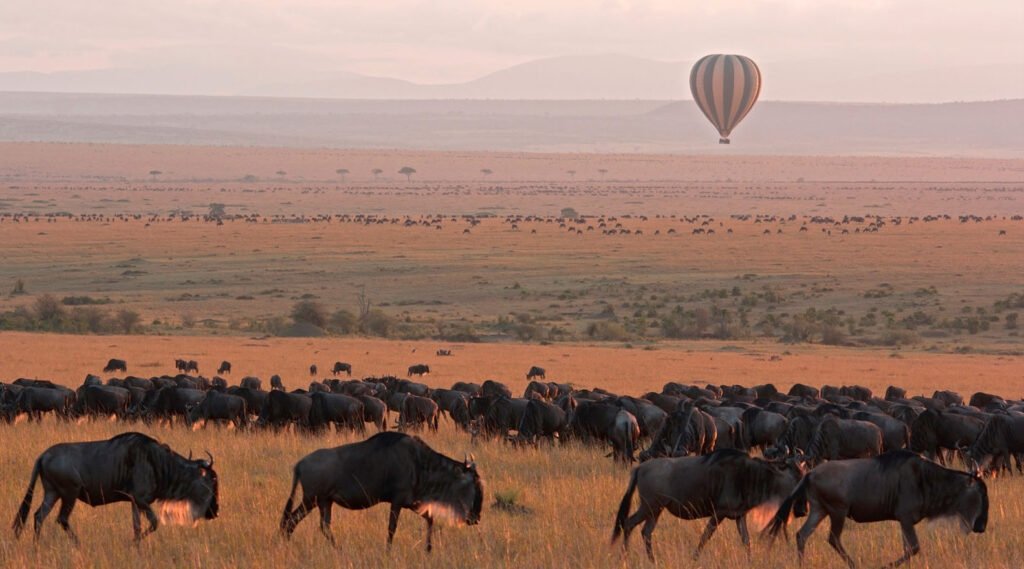
Yes. A sunrise balloon flight over the Serengeti is one of the best ways to see the size of the herds, and we can add it to any migration safari in the right area for your dates.