

More habituated families than anywhere else.
Per person for one hour with a gorilla family (2026).
One of Africa's oldest and richest rainforests.
Buhoma, Ruhija, Rushaga and Nkuringo.
About Bwindi Impenetrable National Park
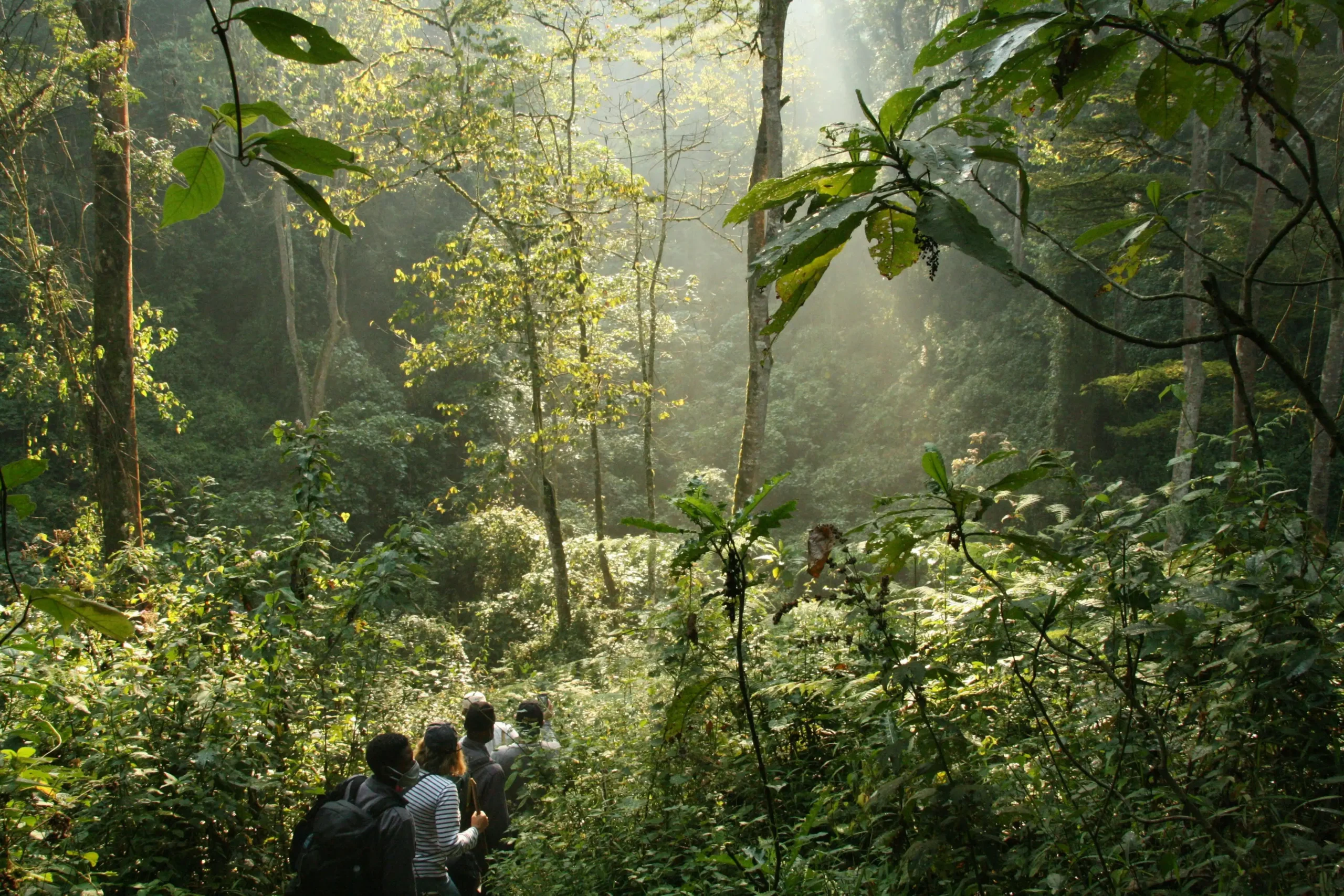
Bwindi Impenetrable National Park lies in south-western Uganda, on the edge of the Albertine Rift, close to the borders with Rwanda and the Democratic Republic of Congo. Its steep, forested hills cover about 320 km² and are among the oldest and most biologically diverse rainforests in Africa, which is why the park became a UNESCO World Heritage Site in 1994.
Bwindi is best known for its mountain gorillas. The forest is home to almost half of the world's remaining population, and more gorilla families are habituated for visits here than anywhere else, giving trekkers a wide choice of groups and dates.
The name 'Impenetrable' is well earned. Thick vegetation, deep valleys and steep ridges make the trekking more demanding than in Rwanda, but the reward is an intimate, wild encounter in one of the most beautiful forests on Earth.
The four sectors of Bwindi
Gorilla trekking in Bwindi is divided into four sectors, each with its own habituated families and lodges. Buhoma, in the north, is the original trekking area, with relatively easy access from Queen Elizabeth National Park. Ruhija, in the east, sits high on the ridges and is excellent for birdwatching.
Rushaga and Nkuringo, in the south, have the largest number of gorilla families and are the closest sectors to Rwanda, which makes them ideal if you fly in via Kigali. Nkuringo is known for its dramatic views and steep trails, while Rushaga is the only sector that offers the gorilla habituation experience.
Your permit is issued for a specific sector, so we choose the sector, lodge and route together to keep driving time to a minimum.

Uganda gorilla permits
A gorilla trekking permit in Uganda costs US$800 per person (at the time of writing in 2026), about half the price of a Rwandan permit, and includes one trek and one hour with a gorilla family. For a deeper experience, the gorilla habituation experience lets a small group spend around four hours with a family that is still being used to people, alongside researchers and trackers. Trekkers must be at least 15 years old, and permits for the dry season sell out early, so we book them as soon as your dates are set.
Plan your gorilla trek →What to expect on a gorilla trek in Bwindi
Treks start in the early morning with a briefing at your sector's headquarters. Groups of up to eight people then set off with a ranger guide, armed rangers and porters, following trackers who go ahead to locate the gorilla family.
Bwindi's terrain is steep and the vegetation thick, so treks can last from one to several hours each way. When you reach the gorillas, you spend one hour with them, watching the silverback, mothers and young feed and play just a few metres away.
Good boots, long sleeves, gloves and a rain jacket are essential, and hiring a porter is highly recommended. They carry your bag, help on steep slopes and benefit directly from tourism.
Other things to do in Bwindi
Bwindi is one of Africa's top birding destinations, with around 350 species, including many Albertine Rift endemics found in only a small area of the continent. Guided nature walks lead to waterfalls and along forest trails rich in butterflies, monkeys and orchids.
Community visits are also rewarding. The Batwa people, the forest's original inhabitants, share their traditions and history, and local projects around Buhoma and the southern sectors welcome visitors. Lake Bunyonyi, a short drive from the south of the park, is a peaceful place to relax after your trek.
How to get to Bwindi
The quickest route to the southern sectors is often via Kigali in Rwanda, a drive of around four to five hours across the border. Alternatively, domestic flights from Entebbe or Kampala land at the airstrips of Kihihi or Kisoro in about one and a half hours, followed by a short drive.
By road from Kampala, the journey takes a full day of eight to ten hours, usually broken with a stop in Queen Elizabeth National Park or at Lake Mburo. We plan the route that best fits your time and budget, including flights from Tanzania.
Best time for gorilla trekking in Uganda
Gorillas can be tracked in Bwindi all year, but the drier months make the steep forest trails easier to walk.
June – August
The main dry season, with firmer trails and good permit availability if booked early.
December – February
Another drier period, popular with holiday travellers.
September – November
Wetter and muddier, but quieter, with lush forest and good birding.
March – May
The wettest months, with challenging trails and some lodges offering low-season rates.
Gorilla trekking in Uganda questions
If you have a question we haven't covered, our Tanzania-based team is happy to help, so just ask.
How much is a gorilla permit in Uganda?
A gorilla trekking permit in Uganda costs US$800 per person at the time of writing in 2026, for one trek and one hour with a gorilla family. The habituation experience costs more and allows about four hours with a family.
Is gorilla trekking in Uganda worth it?
Yes. Bwindi offers a wild, intimate gorilla encounter in an ancient rainforest, more gorilla families than anywhere else and lower permit prices than Rwanda.
How many gorillas are in Bwindi?
Bwindi is home to almost half of the world's mountain gorillas, with many families habituated for trekking across its four sectors.
Which sector of Bwindi is best?
Each sector has its strengths. Buhoma is the most accessible from the north, Ruhija is great for birding, and Rushaga and Nkuringo in the south have the most gorilla families and are closest to Rwanda.
What is the gorilla habituation experience?
It is a longer visit, available in the Rushaga sector, where a small group spends around four hours with a gorilla family that is still getting used to people, alongside researchers and trackers.
How hard is gorilla trekking in Bwindi?
It can be demanding, with steep slopes, thick vegetation and mud. A reasonable level of fitness helps, and porters and walking sticks make it easier.
What is the minimum age for gorilla trekking in Uganda?
Trekkers must be at least 15 years old.
Is Uganda or Rwanda better for gorilla trekking?
Uganda's permits cost less and Bwindi has more gorilla families, while Rwanda offers shorter drives and easier access. Both offer an unforgettable encounter.
How do I get to Bwindi from Tanzania?
The simplest route is to fly from Tanzania to Kigali, then drive four to five hours to Bwindi's southern sectors. Alternatively, fly via Entebbe and take a domestic flight to Kihihi or Kisoro.
When is the best time for gorilla trekking in Uganda?
June to August and December to February are the driest months, with easier trails. Trekking runs all year, and the wetter months are quieter.