

One of only a few places on Earth to see them in the wild.
Per person for one hour with a gorilla family (2026).
A maximum of eight visitors per gorilla family each day.
About 2.5 hours' drive from Kigali International Airport.
About Volcanoes National Park
Volcanoes National Park lies in the far north-west of Rwanda, on the border with Uganda and the Democratic Republic of Congo. It protects the Rwandan slopes of the Virunga Mountains, a chain of dormant and active volcanoes, including Karisimbi, the highest at about 4,500 m, and Bisoke with its crater lake.
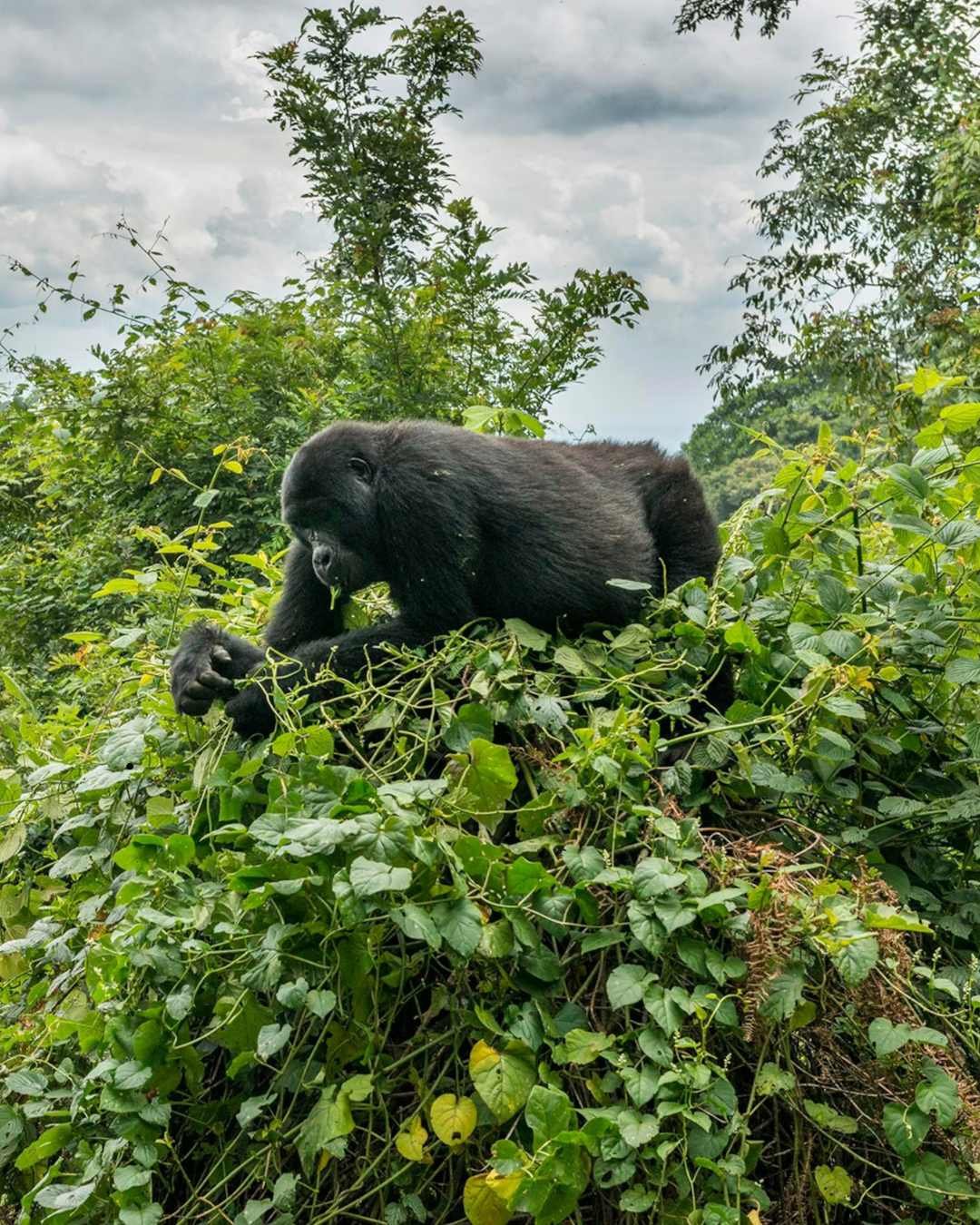
The park's bamboo forest, montane woodland and alpine meadows are home to endangered mountain gorillas, and it was here that the primatologist Dian Fossey carried out her famous research. Today Volcanoes is the best-known place in the world for gorilla trekking, with excellent conservation, well-organised treks and easy access from Kigali.
Mountain gorillas live only in the Virunga volcanoes and in Uganda's Bwindi forest. Thanks to decades of protection, their numbers have grown to more than 1,000, and the fees paid by trekkers help fund rangers, research and the communities around the park.
What to expect on a gorilla trek
Your day begins at the park headquarters in Kinigi at around 7 am, where rangers brief you and assign you to one of the habituated gorilla families. Each family can be visited by a maximum of eight people a day, and you are matched to a group according to your fitness.
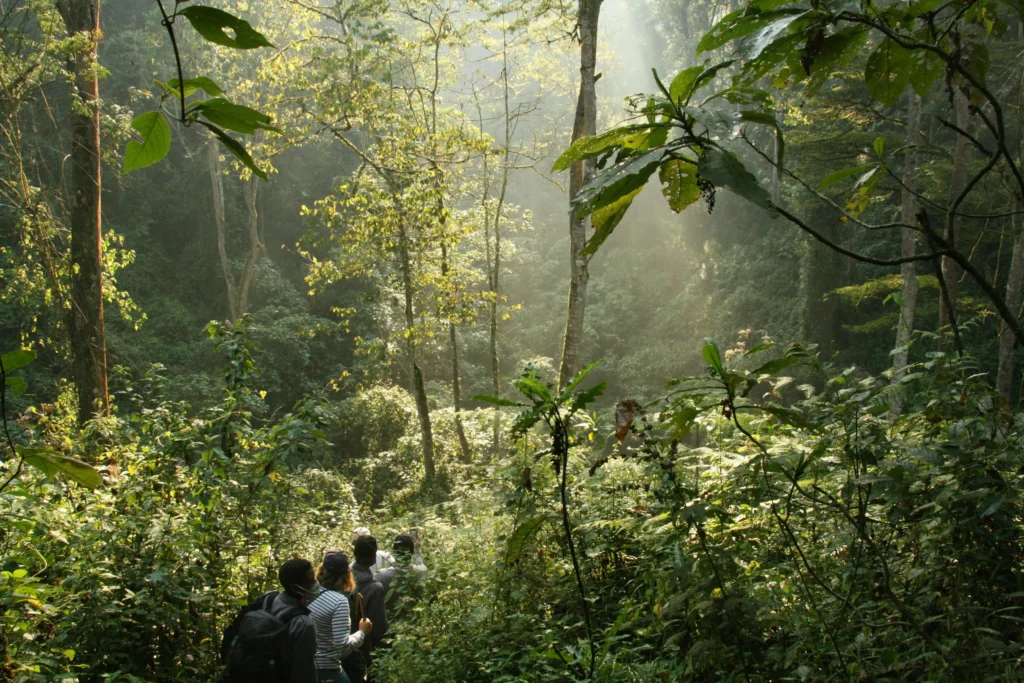
You then drive to the trailhead and hike with your guide and armed rangers through farmland, bamboo and forest. Trackers go ahead to find the gorillas, so the walk can take anything from 30 minutes to several hours, often on steep, muddy slopes.
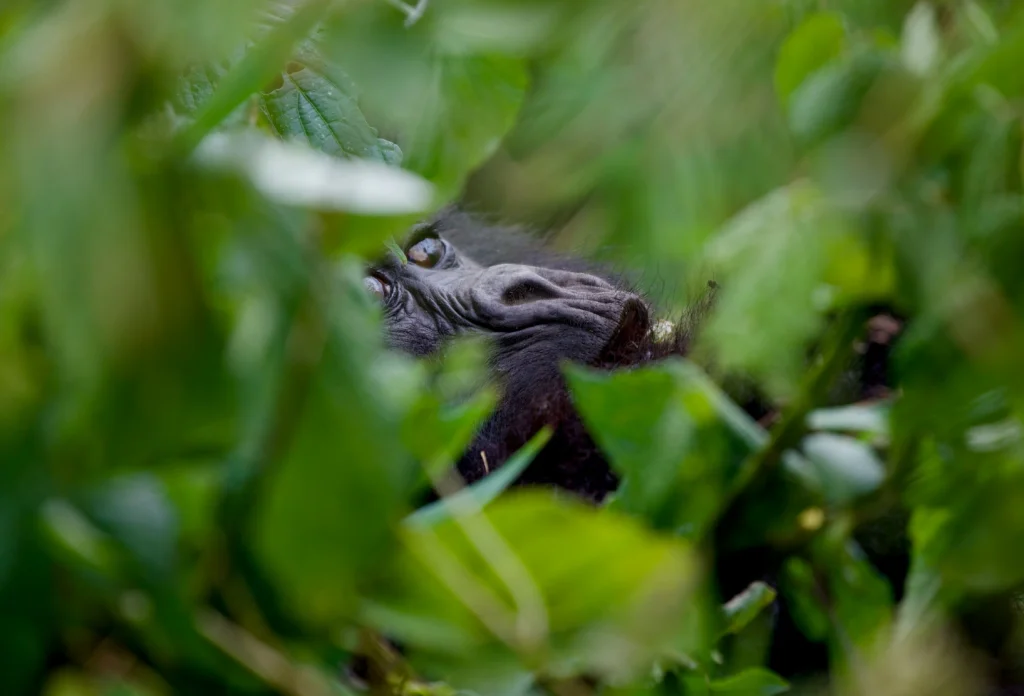
When you reach the family, you spend one magical hour with them, watching the silverback, mothers and playful youngsters feed, groom and rest just a few metres away. It is one of the most moving wildlife encounters on Earth.

Rwanda gorilla permits
A gorilla trekking permit in Rwanda costs US$1,500 per person (at the time of writing in 2026) and is valid for one trek and one hour with a gorilla family. Permits are limited and can sell out months ahead for the dry season, so we book yours as soon as your dates are confirmed. Trekkers must be at least 15 years old. Part of every permit fee is shared with local communities and invested in conservation.
Plan your gorilla trek →How fit do you need to be?
Gorilla trekking is a hike at altitude, starting at around 2,500 m, on uneven and often slippery ground. You do not need to be an athlete, but a reasonable level of fitness makes the day far more enjoyable. If walking is difficult, tell us, and rangers can assign you to a family that usually lives closer to the park edge.
Wear sturdy waterproof hiking boots, long trousers and long sleeves to protect against nettles, and bring gardening gloves, a rain jacket, water and snacks. Hiring a local porter is highly recommended: they carry your bag, help you on steep sections and earn a valuable income.
Other things to do in Volcanoes National Park
Beyond the gorillas, Volcanoes offers some wonderful experiences. Golden monkey treks lead into the bamboo forest to watch these lively, endangered monkeys, and the hike to Dian Fossey's grave and former research camp at Karisoke is a moving pilgrimage for anyone who has read Gorillas in the Mist.
Keen walkers can climb Mount Bisoke to its crater lake in a day, while gentler options include visits to local villages, cultural centres and the twin lakes of Burera and Ruhondo. Many guests also spend a night or two on the shores of Lake Kivu to relax after their trek.
Combining Rwanda with a Tanzania safari
Gorilla trekking pairs beautifully with a Tanzania safari. After the plains and big cats of the Serengeti, an hour with mountain gorillas in the forest is a completely different experience, and the two together make one of Africa's great journeys.
Direct flights connect Kilimanjaro and Dar es Salaam with Kigali, and the drive from Kigali to Volcanoes takes around two and a half hours. Three nights in Rwanda is enough for one gorilla trek plus a golden monkey trek or a hike, and we arrange all the flights, transfers and permits for you.
Best time for gorilla trekking in Rwanda
Gorilla trekking runs all year, but the dry seasons make the hiking easier and the trails less muddy.
June – September
The long dry season, with easier trails and clearer views of the volcanoes.
December – February
Another drier spell, with good conditions and green forest.
October – November
More rain and mud, but fewer visitors and easier permit availability.
March – May
The wettest months, with challenging trails, though the gorillas are often easier to reach.
Gorilla trekking in Rwanda questions
If you have a question we haven't covered, our Tanzania-based team is happy to help, so just ask.
How much is a gorilla permit in Rwanda?
A gorilla trekking permit in Rwanda costs US$1,500 per person at the time of writing in 2026. It includes one trek and one hour with a habituated gorilla family, plus park entry for that day.
Is gorilla trekking in Rwanda worth it?
For most people, yes. Spending an hour with a mountain gorilla family is one of the most extraordinary wildlife experiences in the world, and Rwanda makes it easy, safe and well organised.
How long is the gorilla trek?
The hike to reach the gorillas can take from 30 minutes to several hours, depending on where the family is that day. Once you find them, you spend one hour with the gorillas.
What is the minimum age for gorilla trekking?
Trekkers must be at least 15 years old in both Rwanda and Uganda.
Where is Volcanoes National Park?
Volcanoes National Park is in north-western Rwanda, on the border with Uganda and the Democratic Republic of Congo, about two and a half hours' drive from Kigali.
Is Rwanda or Uganda better for gorilla trekking?
Rwanda offers easier access and shorter drives, while Uganda's permits cost less and Bwindi has more gorilla families. Both offer an unforgettable experience.
When is the best time for gorilla trekking in Rwanda?
June to September and December to February are the driest months, with easier trails. Trekking runs all year, and the rainy months have fewer visitors.
How many gorillas are in Volcanoes National Park?
The Virunga mountains, which Rwanda shares with Uganda and the DRC, are home to around half of the world's mountain gorillas, and around a dozen families in Volcanoes are habituated for visits.
Can I combine gorilla trekking with a Tanzania safari?
Yes. Direct flights link Kilimanjaro and Dar es Salaam with Kigali, so you can add two or three nights in Rwanda to a Tanzania safari.
What should I wear for gorilla trekking?
Wear waterproof hiking boots, long trousers, long sleeves and gloves, and bring a rain jacket. Layers are useful, as mornings in the mountains can be cool.